
差旅运营
Planning a Company Trip to Singapore: What Actually Matters
Singapore is APAC's top meetings city and home to the world's best airport. Here's how to plan a company trip there — logistics, venues, entry, and budget.
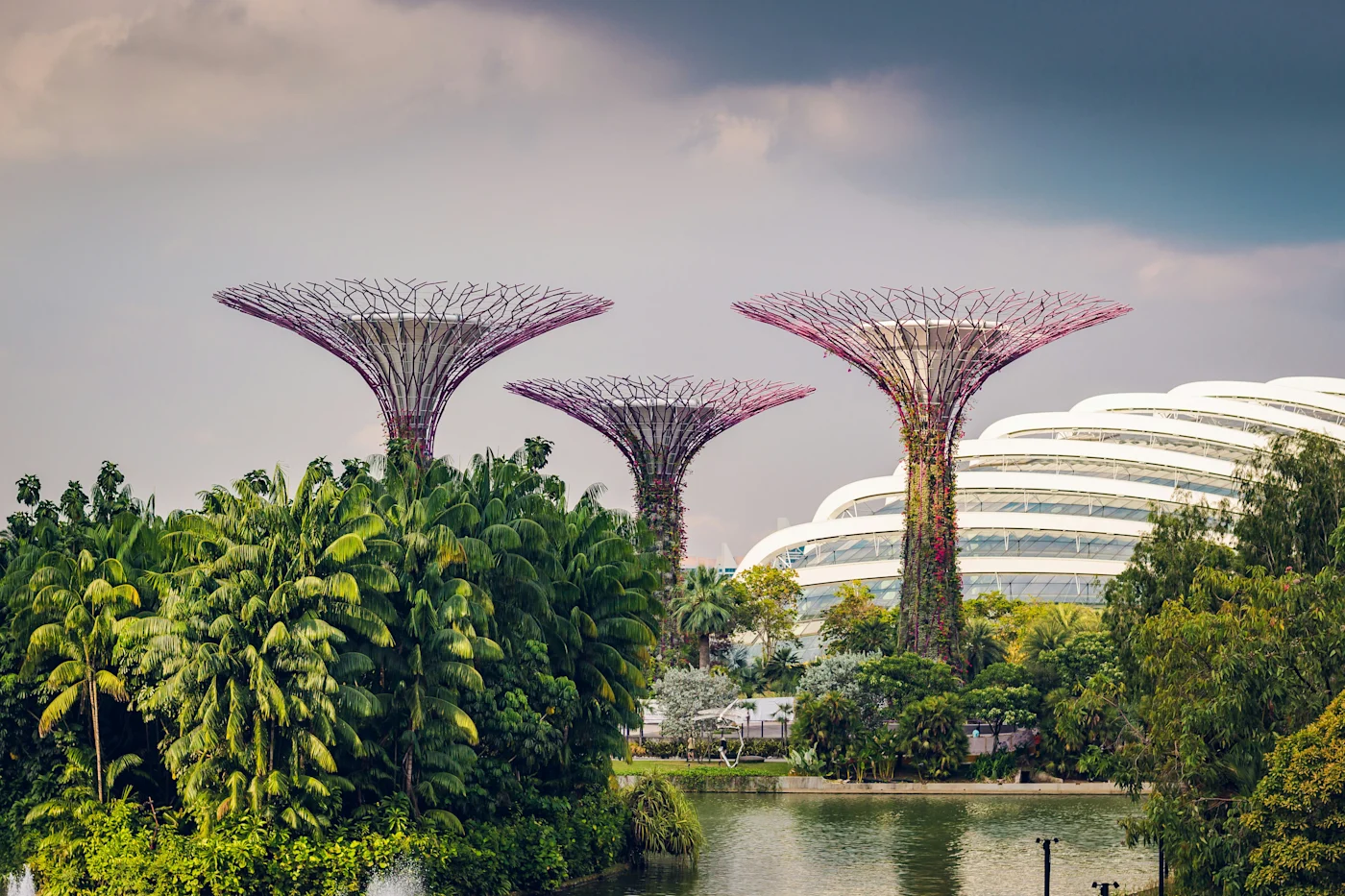
Planning a Company Trip to Singapore: What Actually Matters
Singapore was named the world's best airport in 2025 for the thirteenth time, and it's the top Asia-Pacific city for international meetings. For a company trip, that reputation is the easy part: the logistics are what make or break it.
This is an operational guide for whoever's actually organising the trip: the ops manager, EA, or travel lead booking flights, hotels, and a venue for a team offsite, incentive trip, or small conference. It covers why Singapore works, when to go, how people get around, where to base the group, what to know about entry, and how to keep the budget honest.
Key Takeaways
• Singapore is the #1 Asia-Pacific city for international association meetings (144 in 2024, ICCA), with the world's best airport connecting 163 cities (Skytrax; Changi Airport Group, 2025).
• Time it around the weather: it's tropical year-round, wettest November–January, driest in February.
• Base the group in Marina Bay or the CBD for proximity to the major convention venues.
• Budget for 9% GST, and expect corporate rates to run higher than leisure: MICE visitors spend roughly twice what leisure visitors do (STB, 2025).
Why choose Singapore for a company trip?
Singapore earns its place on the shortlist through connectivity, credibility, and low friction. It was named the World's Best Airport in 2025 by Skytrax (its thirteenth time, the most in the award's history (Skytrax, April 2025)) and it ranked as the top Asia-Pacific city for international association meetings in 2024, hosting 144 of them (ICCA, via TTGmice, 2025). It was second globally in the 2023 ICCA ranking (STB, 2025).
For a regional team, the practical draw is reach: as of January 2025, around 100 airlines operated more than 7,400 weekly flights connecting Singapore to 163 cities across 49 countries (Changi Airport Group, 2025). The busiest short-haul routes in 2025 (Kuala Lumpur, Bangkok, Jakarta, Bali, and Hong Kong) are exactly where most APAC attendees fly in from.
Add English as the working language and a reputation for safety, and the organisational overhead drops. Singapore is expensive, but it's rarely complicated.
When's the best time to go?
Plan around the rain, not the temperature: Singapore sits near the equator, so it's hot and humid all year (roughly 24–32°C), and the real variable is monsoon season. There are two: the Northeast monsoon from December to early March, and the Southwest monsoon from June to September. The wettest stretch is November to January; February is typically the driest month (Meteorological Service Singapore).
For an outdoor-heavy agenda or a rooftop event, aim for the drier first quarter. For anything fully indoors (a conference at a convention centre) the weather matters far less, and you can prioritise venue availability and airfares instead.
The temperature won't surprise anyone; the afternoon downpour will if you haven't planned for it.
How do people get there and around?
Getting in is straightforward, and getting around is one of Singapore's genuine advantages. Changi handled 67.7 million passengers in 2024, reaching 99.1% of pre-pandemic levels, then set an all-time high of nearly 70 million in 2025 (Changi Airport Group, 2025). For a group arriving from multiple APAC cities on the same day, that frequency means flexible arrival windows rather than one narrow connection.
On the ground, the MRT metro and Grab ride-hailing cover the city comprehensively, and the main business districts are compact and close together. For a corporate group, that usually means you don't need to arrange coaches for everyday movement: attendees can self-navigate between hotel, venue, and dinner.
Short transfers between hotel, venue, and airport are the quiet luxury of running an event here.
Where should the group stay and meet?
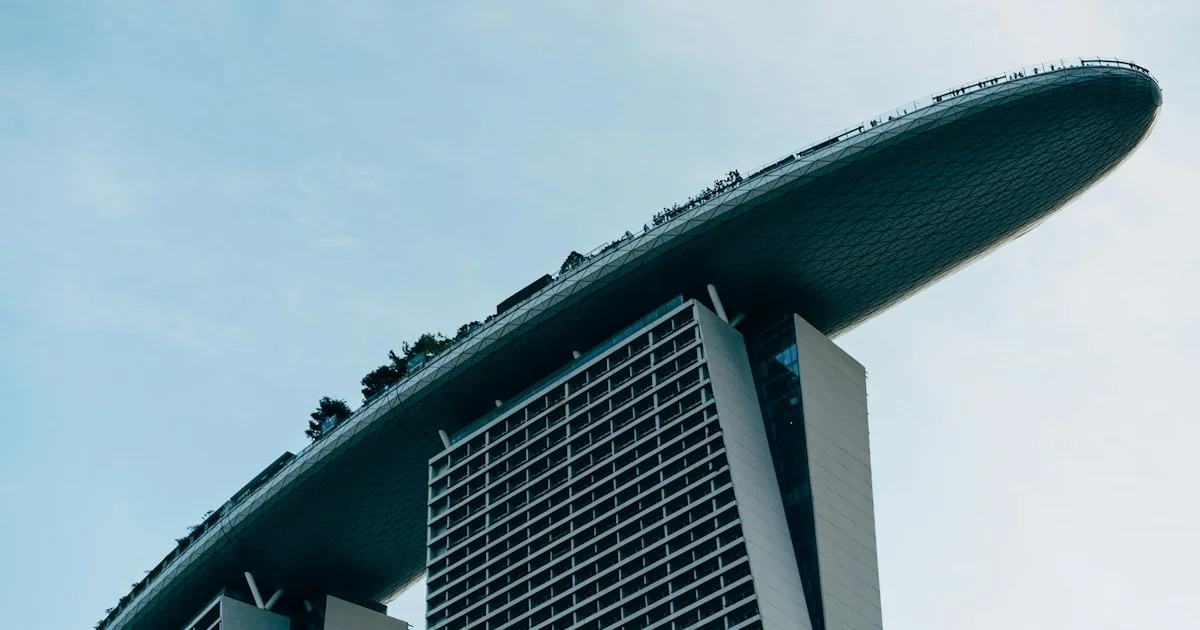
Base the group where the venues are, which, for most corporate events, means Marina Bay or the adjacent CBD. Marina Bay is the flagship MICE precinct: the Sands Expo & Convention Centre offers around 120,000 square metres of event space, room for up to 45,000 delegates, and the largest ballroom in Southeast Asia (Visit Singapore / STB). Here's how the main precincts compare:
Precinct | Best for | Notes |
Marina Bay | Large conferences, flagship events | Sands Expo & Convention Centre; iconic backdrop |
CBD / Raffles Place | Corporate meetings, client-facing | Financial core; walkable to Marina Bay |
Marina Centre | Mid-size conventions | Suntec Singapore convention centre |
Orchard Road | Delegate accommodation | Hotel and retail corridor |
For a smaller offsite, the CBD keeps you close to the action without the flagship-venue price tag; for a large conference, Marina Bay puts delegates within walking distance of the biggest halls.
Match the precinct to the event size, and the daily logistics mostly solve themselves.

A sample two-day company-trip itinerary
Singapore's compactness suits a tight, high-value trip. You don't lose half a day to transfers. A simple two-day skeleton most teams can adapt:
Day one, arrive and align. Morning arrivals into Changi; the group checks in around Marina Bay or the CBD (a short, self-navigated transfer). An afternoon working session at the hotel or a Marina Bay venue while people are fresh, then a welcome dinner along the waterfront: walkable, weather permitting, with the skyline doing the work.
Day two: work, then wind down. A full-day conference or workshop at the Sands Expo & Convention Centre or Suntec, sized to the group. Leave the late afternoon open for a team activity: Gardens by the Bay, the Marina Bay Sands SkyPark, or simply the hawker-centre circuit for something local and unpretentious. Departures the next morning, or red-eyes out of Changi for the short-haul crowd.
The point isn't this exact plan. It's that Singapore lets you run a genuinely productive two days without logistics eating the agenda. Add a third day only if you're pairing the trip with client meetings or a longer offsite.
What do you need to know about entry and visas?
Two things are near-universal, and the third depends on your travellers' passports. First, every visitor except Singapore passport holders needs a passport valid for at least six months (ICA). Second, most travellers must submit the SG Arrival Card within three days before arrival, and it's worth stressing to your team that the Arrival Card is not a visa (ICA).
Whether a traveller needs an actual entry visa varies by nationality, so don't rely on a day-count you read somewhere, send the group to Singapore's official ICA visa checker and confirm each nationality before booking. For a mixed-nationality APAC team, this is the single most common trip-planning slip.
Check entry requirements per passport early. It's the cheapest problem to solve in advance and the most expensive to discover at the gate.
How do you budget and keep it under control?
Budget for Singapore being a premium destination, and build the tax and demand in from the start. GST rose to 9% on 1 January 2024 (IRAS), so factor it into every venue, hotel, and catering quote. Expect corporate rates to sit above leisure pricing too: MICE visitors spend roughly twice what leisure visitors do, according to the tourism board (STB, via CNBC, 2025), a signal of how the market prices business demand.
Regional demand is climbing, which keeps rates firm: Asia-Pacific business-travel spend was forecast to reach about US$700 billion in 2026, up 10.9% on the year and leading global growth (GBTA). Practical levers that protect the budget:
Book flights and hotels against negotiated corporate rates, not public fares.
Set a clear per-night hotel cap and share it before anyone books.
Keep bookings, rates, and expenses visible in one place so the trip reconciles cleanly afterwards.
The costs in Singapore are predictable. It's the unmanaged bookings around them that quietly inflate the total.
What to brief your team before they fly
A few lines to travellers before the trip prevent the usual day-one friction:
Entry. Submit the SG Arrival Card within three days before arrival (it's not a visa), and check your passport has at least six months' validity. Confirm your nationality's visa position on the ICA checker.
Weather. Pack for hot, humid days and a likely afternoon downpour: a compact umbrella, plus a layer for aggressively air-conditioned indoor venues.
Getting around. Set up Grab and a contactless/MRT card; the group won't need coaches for daily movement.
Payments. Cards and mobile wallets are near-universal; a little cash still helps at hawker centres.
None of it is onerous, but sending it once (rather than fielding the same questions individually at the gate) is the difference between a smooth arrival and a scattered one.
Part of our guide to Corporate Travel Management in Singapore: The 2026 Guide for Growing Companies.
Frequently Asked Questions
Is Singapore a good destination for a company trip?
Yes. It's the top Asia-Pacific city for international association meetings, hosting 144 in 2024 (ICCA, via TTGmice, 2025), with the world's best airport connecting 163 cities (Skytrax; Changi Airport Group, 2025). English is the working language and the city is compact and safe, which keeps organisational overhead low. The main trade-off is cost: it's a premium destination.
When is the best time to hold a corporate event in Singapore?
For outdoor-heavy agendas, aim for the drier first quarter: February is typically the driest month, while November to January is the wettest (Meteorological Service Singapore). It's hot and humid year-round (about 24–32°C), so temperature isn't the deciding factor. For fully indoor conferences, prioritise venue availability and airfares over weather.
Where should a company group stay in Singapore?
Base the group near the venues, usually Marina Bay (home to the Sands Expo & Convention Centre) or the adjacent CBD/Raffles Place for corporate meetings. Marina Centre (Suntec) suits mid-size conventions, and Orchard Road is a common accommodation corridor. Keeping the group in one precinct minimises daily transfers.
Do travellers need a visa to enter Singapore?
It depends on nationality. Every non-Singaporean needs a passport valid at least six months, and most travellers must submit the SG Arrival Card within three days before arrival, which is not a visa (ICA). Whether an entry visa is required varies by passport, so confirm each nationality on Singapore's official ICA visa checker before booking.
How much does a company trip to Singapore cost?
Singapore is a premium destination, so budget accordingly. Factor in 9% GST on venues, hotels, and catering (IRAS), and expect business rates above leisure pricing: MICE visitors spend roughly twice what leisure visitors do (STB, 2025). Booking against negotiated corporate rates and setting hotel caps upfront are the most reliable ways to control the total.
Quick Takeaways
Singapore leads APAC for international meetings and has the world's best airport, connectivity and credibility are its strengths.
Time outdoor events for the drier first quarter; November–January is wettest.
Base the group in Marina Bay (large events) or the CBD (smaller meetings) to cut daily transfers.
Confirm entry requirements per nationality on the official ICA checker before booking.
Budget for 9% GST and premium business rates; negotiated rates and hotel caps keep the total honest.
Related reading:
How does Accomy work? (the Accomy product explainer, for teams managing group travel)
What the Michelin Key means for corporate travel (choosing hotels for business trips)
Sources (retrieved 2026-07-13)
Skytrax, Singapore Changi Airport is named the World's Best Airport in 2025, April 2025 — https://skytraxratings.com/singapore-changi-airport-is-named-the-worlds-best-airport-in-2025
Singapore Tourism Board, Singapore Achieves Historical High in Tourism Receipts in 2024, February 2025 — https://www.stb.gov.sg/about-stb/media-publications/media-centre/singapore-achieves-historical-high-in-tourism-receipts-in-2024/
TTGmice, Japan, Singapore take top spots in ICCA's 2024 country and city rankings for Asia-Pacific, May 2025 — https://www.ttgmice.com/2025/05/21/japan-singapore-take-top-spots-in-iccas-2024-country-and-city-rankings-for-asia-pacific/
Changi Airport Group traffic figures (2024; 2025 all-time high), via Aerospace Singapore / Malay Mail, 2025–2026 — https://aerospace.sg/changi-airport-reports-67-7m-passenger-traffic-in-2024-hitting-99-1-of-pre-pandemic-levels/
CNBC, Singapore tourism: business travelers, cruising and live events (STB on MICE spend), April 2025 — https://www.cnbc.com/2025/04/16/singapore-tourism-business-travelers-cruising-and-live-events.html
GBTA, Global Business Travel Spending Forecast (APAC 2025), 2025 — https://gbta.org/global-business-travel-spending-to-reach-1-57-trillion-in-2025-amid-trade-policy-uncertainty-and-economic-risk-according-to-new-gbta-forecast/
Meteorological Service Singapore (NEA), Climate of Singapore — https://www.weather.gov.sg/climate-climate-of-singapore/
IRAS, GST Rate Change (9% from 1 Jan 2024) — https://www.iras.gov.sg/taxes/goods-services-tax-(gst)/gst-rate-change/gst-rate-change-for-consumers1
Immigration & Checkpoints Authority (ICA), Entering Singapore, SG Arrival Card, Visa requirements — https://www.ica.gov.sg/enter-transit-depart/entering-singapore
Visit Singapore / STB, Sands Expo & Convention Centre — https://www.visitsingapore.com/mice/en/plan-your-event/find-a-venue/sands-expo-and-convention-centre/