
Travel ops
Planning a Company Trip to Jakarta: Airports, Areas, Venues
Fly into Soekarno-Hatta, base the group in the Golden Triangle, and plan around Jakarta's traffic. A practical guide to running a company trip in Jakarta.
Planning a Company Trip to Jakarta: Airports, Areas, Venues
Jakarta is Indonesia's commercial capital and the front door to Southeast Asia's largest economy, and a handful of early decisions (which airport, which district, which venue) decide how smoothly a company trip runs. This guide covers those city-level specifics: the practical layout, not a tourist itinerary. For the regional context on why corporate travel in this part of the world behaves differently, read the APAC companion guide and come back here for Jakarta itself.
It's written for the ops manager or event planner booking a Jakarta offsite, conference, or client-facing trip who wants the ground truth. And in Jakarta, the ground truth starts with one word: traffic.
Key Takeaways
• Fly the group into Soekarno-Hatta (CGK) for international routes; Halim (HLP) is the smaller, closer secondary airport for some domestic legs. Allow generous transfer time either way.
• Base in the Golden Triangle (Segitiga Emas) (the Sudirman–Thamrin axis and Kuningan, including SCBD) where most corporate HQs and premium hotels sit.
• Get around on the MRT and TransJakarta along the main corridors, with Gojek or Grab as the default fallback; base centrally to minimise transfers.
• Travel in the dry season, June to September. Avoid November to March, when the rains peak and localised flooding hits in January and February.
Which Jakarta airport should you fly into?
Fly the group into Soekarno-Hatta International (CGK) for international routes, and treat Halim Perdanakusuma (HLP) as a closer secondary option for domestic legs. CGK, west of the city in Tangerang, is Indonesia's primary international gateway and carries the bulk of long-haul traffic. Halim sits nearer the centre in East Jakarta but serves a narrower set of routes. The deciding factor isn't map distance. It's the road.
The transfer leg is where Jakarta punishes the unprepared. From CGK, the Soekarno-Hatta Airport Rail Link (operated by Railink) runs to central stations near the Golden Triangle, and the toll road connects by car, but road congestion can stretch a transfer well beyond what the distance suggests. Halim's proximity helps on paper, yet the same traffic applies. Build in generous buffer time at both ends, and prefer the rail link when the timings work for a group moving together.
Airport | Role | To the centre |
Soekarno-Hatta (CGK) | Primary international gateway, west in Tangerang | Airport Rail Link (Railink) to central stations; toll road by car |
Halim (HLP) | Smaller secondary airport, closer in East Jakarta | Nearer the centre, but subject to the same road congestion |
Where should you base the group in Jakarta?
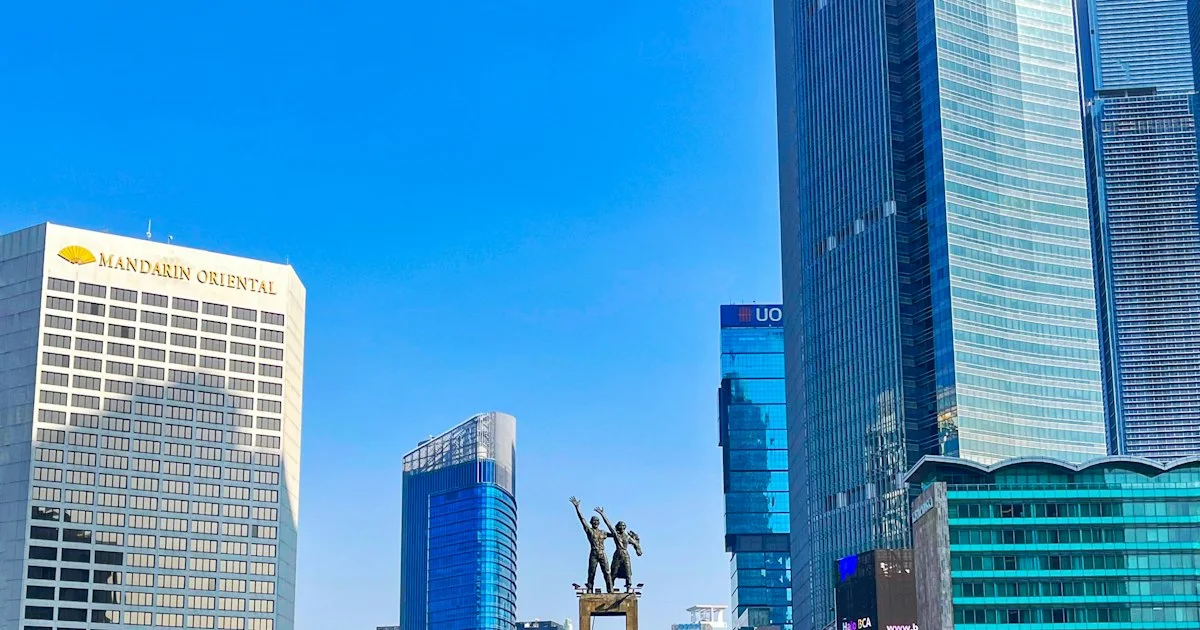
Base the group in the Golden Triangle (Segitiga Emas) the wedge formed by Jalan Sudirman, Jalan Thamrin, and the Kuningan district. It holds most corporate headquarters, the premium hotel supply, and the SCBD (Sudirman Central Business District) precinct. For a working trip, staying inside this triangle removes the single biggest time sink in the city: crossing it.
The sub-areas play distinct roles, so match the base to the agenda.
Area | Role | Best for |
Sudirman / SCBD | Modern CBD spine and business precinct | Client-facing, premium hotels, central base |
Thamrin | Northern axis near Bundaran HI and government offices | Central meetings, larger hotels |
Kuningan / Mega Kuningan | Embassies and corporate offices | Diplomatic or multinational agendas |
Senayan | Business and sports/convention zone | Proximity to the Jakarta Convention Center |
Sudirman and SCBD give you the most modern hotel stock beside the MRT; Thamrin trades a little polish for a central position near Bundaran HI. Either works. The mistake is basing a group somewhere scenic or cheap on the outskirts, then losing hours a day to the commute back in.
Where are Jakarta's main event venues?
Match the venue to the event size and, just as importantly, its location. The Jakarta Convention Center (JCC) in Senayan is the central, established choice, close to the Golden Triangle and well suited to conferences and mid-to-large events. JIExpo Kemayoran, north of the centre, is a major exhibition complex built for large-scale trade shows. ICE BSD (the Indonesia Convention Exhibition) is a modern, large-format venue out in BSD City in Greater Jakarta, toward the Tangerang side.
Location drives the logistics more than the hall does. JCC keeps delegates close to central hotels and the MRT. JIExpo works for exhibition scale but adds a cross-town leg. ICE BSD is capable and modern, yet it sits well outside the core: if your event is there, consider basing near BSD for the duration rather than commuting the group in and out through daily traffic. The rule of thumb: central venue for meetings and conferences, purpose-built exhibition halls for anything at trade-show scale.
How do you get around Jakarta?
Plan every movement around congestion, because it is the defining constraint. The MRT Jakarta runs along the Sudirman–Thamrin spine (the exact corridor where you should be based) and TransJakarta bus rapid transit covers key routes across the city. Both help, but road traffic remains significant almost everywhere else. For door-to-door trips, ride-hailing through Gojek or Grab is ubiquitous and usually the default.
For a visiting group, the practical move is to keep as much travel as possible on the MRT line and treat cars as the exception, not the rule. Load a local e-money card for the MRT and TransJakarta, and set expectations early: a short hop by distance can be a long one by clock. Base well, and most of the day's movement stays on rail rather than stuck on a flyover.
When to schedule a Jakarta company trip
Aim for the dry season, June to September. Jakarta has a tropical monsoon climate, and the wet season runs roughly November to March, with January and February the peak of the rains, the window when localised flooding can close roads and compound the everyday congestion. Scheduling in the dry months keeps transfers, venue access, and evening logistics far more predictable.
If the calendar forces a wet-season date, tighten the plan: base centrally, keep the agenda on the MRT corridor, and pad every transfer. The rains rarely last all day, but they arrive fast and hit the roads hardest. A group that can move without depending on the road network absorbs a downpour with far less disruption than one that can't.
A sample company-trip itinerary in Jakarta
Jakarta rewards a trip built tight around the Golden Triangle: base well, and the working day stays on one corridor. A three-day shape:
Day one: arrive and base. Arrivals into Soekarno-Hatta, then the Airport Rail Link or a pre-booked transfer to a Sudirman/SCBD or Thamrin hotel. Keep the first evening close to base (a dinner in SCBD or near Bundaran HI) while people settle and the jet lag lifts.
Day two, the working day. Conference or workshop at the Jakarta Convention Center for a central event, or at ICE BSD if you need exhibition scale (base near BSD that night if so). Everyone moves on the MRT along the Sudirman spine, with ride-hailing only where the rail doesn't reach. A team dinner in the Golden Triangle to close the day.
Day three (culture, or a regional add-on. A half-day in the city) Kota Tua's old town or a team activity: before departures, or, since you're already in the region's largest hub, pair the trip with a short onward leg elsewhere in Southeast Asia.
Adapt as needed. The point holds: base inside the triangle and the agenda runs on rail, not on the road.
Jakarta-specific vs country-level planning
Because this is a Jakarta guide, it stays on what's specific to the city: airport choice, districts, venues, seasons, and getting around. Two practical realities shape spending and support on the ground, and both are worth planning for whatever tools you use. Indonesia runs in rupiah (IDR), so budget for local-currency settlement rather than card surprises. And business here is transacted heavily over WhatsApp (from hotel coordinators to drivers) so messaging-first support beats an email queue.
This is the one place a travel operating system earns its keep on a Jakarta trip: multi-currency payment that settles in IDR, negotiated rates and price caps applied at the point of booking, and a human concierge reachable on the regional messaging channels your team already uses. Accomy (in the interest of transparency, the platform behind this guide) supports those three. The general principle stands regardless of tool: plan for local-currency settlement and messaging-first help before you land.
Frequently Asked Questions
Which airport should a company group fly into for Jakarta?
Fly into Soekarno-Hatta International (CGK), Indonesia's primary international gateway, west of the city in Tangerang. Halim Perdanakusuma (HLP) is a smaller secondary airport, closer to the centre in East Jakarta, useful for some domestic legs. Whichever you choose, allow generous transfer time: Jakarta's road congestion is heavy, and the CGK Airport Rail Link (Railink) is often the more predictable route into the centre.
Where should a company base itself in Jakarta?
Base in the Golden Triangle (Segitiga Emas): the wedge formed by Jalan Sudirman, Jalan Thamrin, and the Kuningan district, including the SCBD precinct. It holds most corporate HQs and premium hotels, and staying inside it removes the biggest time sink: crossing the city. Sudirman and SCBD offer the most modern hotels beside the MRT; Thamrin sits centrally near Bundaran HI.
What are the main conference venues in Jakarta?
The Jakarta Convention Center (JCC) in Senayan is the central, established choice, close to the Golden Triangle and suited to conferences and mid-to-large events. JIExpo Kemayoran, north of the centre, handles large exhibitions. ICE BSD (Indonesia Convention Exhibition) is a modern, large-format venue in BSD City in Greater Jakarta: capable, but far enough out that basing near BSD for the event makes sense.
How do you get around Jakarta for a business trip?
Plan around congestion. The MRT Jakarta runs along the Sudirman–Thamrin spine, and TransJakarta bus rapid transit covers key corridors, but road traffic is significant elsewhere. Ride-hailing through Gojek or Grab is ubiquitous for door-to-door trips. Keep as much movement as possible on the MRT, load a local e-money card, and base centrally so a short hop doesn't become a long one.
When is the best time of year for a company trip to Jakarta?
Aim for the dry season, June to September. Jakarta's wet season runs roughly November to March, with January and February the peak of the rains and the window for localised flooding that compounds everyday congestion. Scheduling in the dry months keeps transfers and venue access predictable. If a wet-season date is unavoidable, base centrally and keep the agenda on the MRT corridor.
Quick Takeaways
Fly into Soekarno-Hatta (CGK) for international routes; use Halim (HLP) for closer domestic legs, and pad every transfer for traffic.
Base the group in the Golden Triangle (Sudirman/SCBD, Thamrin, or Kuningan) never on the scenic outskirts.
The Jakarta Convention Center is the central venue; ICE BSD is the large-format option in Greater Jakarta, best paired with a nearby base.
Keep movement on the MRT and TransJakarta, with Gojek or Grab as the fallback.
Travel June to September; avoid the November to March rains, especially the January to February flood peak.
Related reading:
Planning a company trip to Singapore (the neighbouring APAC destination guide)
Planning a company trip to Malaysia (the regional companion guide)
Why APAC corporate travel differs (the regional context behind local-currency and messaging-first planning)
Sources (retrieved 2026-07-13)
Soekarno-Hatta International Airport (Angkasa Pura Indonesia), airport role and access — https://www.soekarnohatta-airport.co.id
Railink, Soekarno-Hatta Airport Rail Link routes and stations — https://www.railink.co.id
MRT Jakarta, network and Sudirman–Thamrin corridor — https://www.jakartamrt.co.id
TransJakarta, bus rapid transit corridors — https://transjakarta.co.id
Jakarta Convention Center, venue location and facilities (Senayan) — https://www.jcc.co.id
BMKG (Indonesian Agency for Meteorology, Climatology and Geophysics), seasonal / monsoon patterns — https://www.bmkg.go.id