
Travel ops
Planning a Company Trip to Japan: Where to Go and When to Avoid
Japan drew a record 42.7M visitors in 2025 and topped Asia-Pacific for association meetings. Which city to pick, when to go and what to avoid on a company trip.
Planning a Company Trip to Japan: Where to Go and When to Avoid
Japan drew a record 42.7 million international visitors in 2025 (JNTO, 2026), and it ranked first in Asia-Pacific for international association meetings (ICCA, 2026). The appeal for a company trip is obvious. The planning is where it gets specific, because Japan rewards preparation and punishes calendar mistakes.
This is a country-level guide for whoever's organising the trip. It covers which city to base it in, when to go, how people get around, what to know about entry, and where the budget and logistics need attention.
Key Takeaways
• Japan set a record 42.7M international visitors in 2025 (+15.8% on 2024; JNTO, 2026) and ranked first in Asia-Pacific for association meetings (ICCA, 2026).
• Base the trip by purpose: Tokyo for a primary MICE hub, Osaka as the second gateway, Kyoto for a cultural offsite.
• Get the timing right first: avoid Golden Week (late April to early May), Obon (mid-August), and New Year, when much of the country travels at once.
• Plan for lower English prevalence than Singapore or Hong Kong, and budget for bilingual support or interpreters.
Why choose Japan for a company trip?
Japan's credentials are settled, so the planning detail decides how the trip goes.
Japan has the scale, the safety record, and the meetings credentials a company trip needs. It welcomed a record 42.7 million international visitors in 2025, up 15.8% on 2024's own record, with inbound spending reaching ¥9.5 trillion (Japan Tourism Agency via Nippon.com, January 2026). Hotels in the main cities can fill early, so book well ahead.
In ICCA's 2025 rankings, Japan hosted 491 international association meetings, first in Asia-Pacific for the fourth year running and sixth globally (ICCA, via JNTO, May 2026). It also ranked 10th on the Global Peace Index 2026 (Institute for Economics & Peace), which matters when you're accountable for a group's duty of care.
Which city should you base the trip in?
Pick the city by the job the trip has to do.
Japan's hubs play distinct roles. Tokyo is the default for a conference or client-facing event. It's the primary MICE hub, the largest gateway (Haneda plus Narita), and ranked tenth in the world for association meetings in 2025 (ICCA, 2026).
Osaka is the second hub, reached via Kansai airport, and it pairs naturally with Kyoto. Kyoto itself is the offsite and incentive choice: cultural, experiential, and a short Shinkansen ride from Shin-Osaka.
City | Role for a company trip | Gateway |
Tokyo | Primary MICE hub; conferences, client events | Haneda, Narita |
Osaka | Second hub; often paired with Kyoto | Kansai (KIX) |
Kyoto | Cultural offsite / incentive | Via Osaka (Shinkansen) |
Consider a working session in Tokyo or Osaka, then a day in Kyoto for the team-building half. The rail network makes that combination easy.
When should you go, and when should you avoid?
Fix the dates first, and keep clear of the three domestic travel holidays.
Plan the calendar before anything else. Cherry blossom (late March to early April) and autumn foliage (around November) are the scenic peaks, and also busier and usually pricier, so book far ahead if you want them. The bigger traps are the domestic travel holidays, when much of the country travels at once.
Holiday | When | What to expect |
Golden Week | Late April to early May (in 2027: 29 April, then 3–5 May) | A cluster of national holidays; trains and hotels are at their busiest |
Obon | Mid-August | A major domestic travel period |
New Year | Roughly 29 December to 3 January | Many restaurants and smaller businesses close |
Sources: JNTO; Nippon.com (Golden Week 2027).
A corporate event across any of these will be busier and usually pricier. For business travel, the shoulder months are quieter.
Getting there and getting around
Three gateways get your team in, and the Shinkansen links the main cities.
For most company trips, three international gateways matter: Tokyo's Haneda (around 85.7 million passengers in 2024, and closest to the centre) and Narita, plus Kansai for the Osaka, Kyoto and Kobe region (Nippon.com, 2025). International air traffic to Japan had fully recovered by 2024.
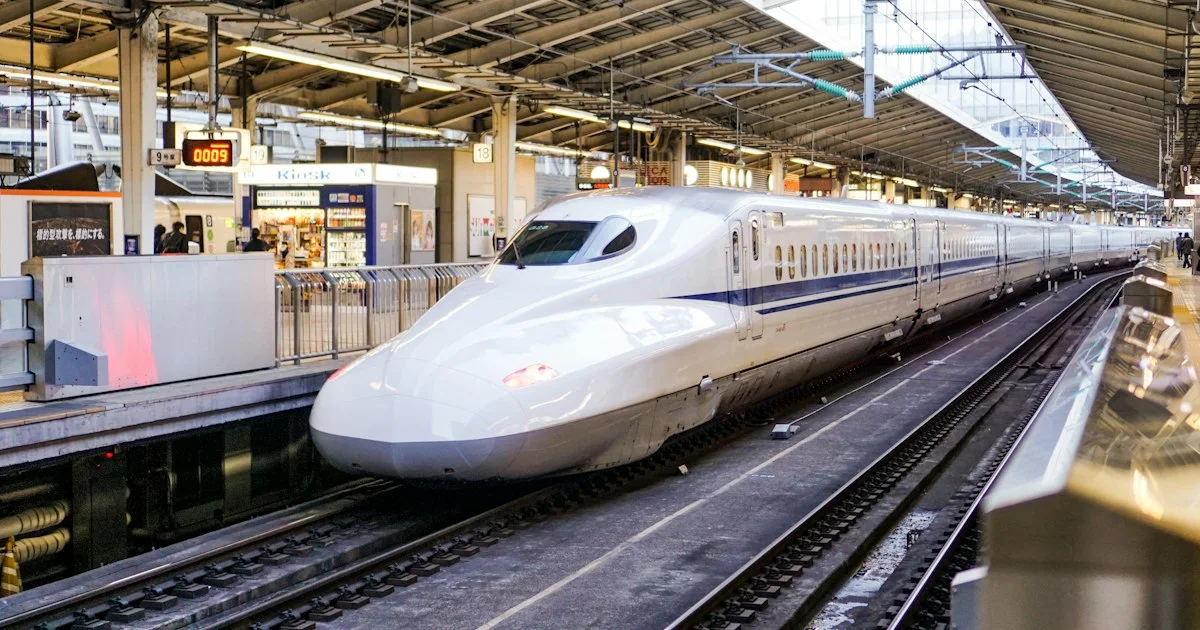
Between cities, use the Shinkansen. The Tokaido line links Tokyo, Nagoya, Kyoto, and Osaka, with the fastest service covering Tokyo to Shin-Osaka in just under two and a half hours (JR Central). Rechargeable IC cards (Suica, PASMO, ICOCA) work on most trains, subways and buses in the big cities, and as everyday payment.
Note that tapping an IC card doesn't reserve a Shinkansen seat. Book reserved seats separately: at the station, on the smartEX app for the Tokaido line, or on JR East's Eki-net for lines north and east of Tokyo. You can then link the IC card for ticketless boarding.
Sort the bullet-train reservations ahead of time and the rest of the ground transport looks after itself.
What do you need to know about entry and visas?
Check every passport early, because the rules vary by nationality.
Entry depends on nationality, so verify each passport before booking. Japan has visa-exemption arrangements with many countries for short business or tourism stays. The length of stay granted on arrival varies by nationality and the rules change, so check each traveller's nationality against Japan's official Ministry of Foreign Affairs (MOFA) guidance.
On a mixed-nationality APAC team, someone on a passport outside the exemption list may need to arrange a visa in advance. Confirm it early, per passport, using the official MOFA and JNTO pages.
What to budget and plan for
The 10% consumption tax and the language gap are what catch out teams used to Singapore or Hong Kong.
Budget for an organised, premium destination. First, consumption tax is 10% (8% on takeaway food and non-alcoholic drinks, but not dining out), so check whether each venue, hotel, and catering quote includes the 10% (Japan National Tax Agency).
Second, and easy to underestimate, English is less widely spoken than in Singapore or Hong Kong. Japan sits in the "very low proficiency" band of the 2025 EF English Proficiency Index, ranked 96th of 123 (EF, 2025). Treat that as directional rather than precise, but plan for it with bilingual signage, an interpreter for sessions, or venues with confirmed English support.
The wider cost backdrop is firm demand. Asia-Pacific business-travel spend is forecast to reach US$700.9 billion in 2026, up 10.9% and leading global growth (GBTA, May 2026). A few practical habits keep the budget steady:
Book flights and hotels against negotiated corporate rates, well ahead of peak windows.
Allow for Japan's International Tourist Tax, raised to ¥3,000 per departing traveller from 1 July 2026 and usually included in the air fare (JNTO).
Carry some cash: Japan is increasingly cashless in the cities, but smaller vendors still favour it.
Keep bookings, rates, and expenses visible in one place so a multi-city itinerary reconciles cleanly.
Frequently Asked Questions
Is Japan a good destination for a company trip?
Yes. It drew a record 42.7 million international visitors in 2025 (JNTO, 2026), ranked first in Asia-Pacific for association meetings (ICCA, 2026), and ranked 10th on the Global Peace Index 2026 (Institute for Economics & Peace).
That matters when you're accountable for a group's duty of care. The main things to plan around are timing (avoid the domestic holidays) and lower English prevalence than Singapore or Hong Kong, so budget for bilingual support or interpreters.
Which Japanese city suits a corporate event?
It depends on the purpose. Tokyo is the primary MICE hub for conferences and client-facing events, with the largest air gateway. Osaka is the second hub, reached via Kansai airport.
Kyoto suits a cultural offsite or incentive leg and is a short Shinkansen ride from Shin-Osaka. You can pair a working session in Tokyo or Osaka with a Kyoto team day, since the rail network makes that combination easy.
When should you avoid travelling to Japan for business?
Avoid the domestic travel holidays, when trains and hotels are at their busiest: Golden Week (late April to early May), Obon (mid-August), and New Year (roughly 29 December to early January). New Year is also when many restaurants and smaller businesses close.
Cherry-blossom season (late March to early April) and autumn foliage (November) are beautiful but busier and usually pricier, so book far ahead if you want them. Shoulder months are quieter for corporate travel.
Do you need a visa to visit Japan for business?
It depends on nationality. Japan has visa-exemption arrangements with many countries for short stays, but the stay length granted varies by nationality and the rules change.
Check each traveller's passport against the official Ministry of Foreign Affairs (MOFA) guidance before booking. For a mixed-nationality team, confirm every passport individually and early, using the official MOFA and JNTO pages, because someone outside the exemption list may need to arrange a visa in advance.
How do you get around Japan on a company trip?
Use the Shinkansen between cities: the Tokaido line connects Tokyo, Kyoto, and Osaka, with Tokyo to Shin-Osaka in just under two and a half hours (JR Central). IC cards (Suica, PASMO, ICOCA) cover most trains, subways and buses in the big cities, and work as everyday payment too.
Reserved Shinkansen seats are booked separately (at the station, via smartEX for the Tokaido line, or JR East's Eki-net), not by tapping an IC card; you can then link the card for ticketless boarding. Sort the reservations ahead of time and the rest of the ground transport looks after itself.
Related reading
Three more guides for planning a company trip.
Planning a company trip to Singapore (the APAC destination guide)
Planning a company trip to Hong Kong (airport, areas, and venues)
Do employees really enjoy company trips as incentive? (the evidence on offsites)
Sources (checked 17 October 2026)
JNTO / Japan Tourism Agency, Record 42.7 million international visitors in 2025 (and ¥9.5tn spending), via Nippon.com, January 2026 — https://www.nippon.com/en/japan-data/h02673/
JNTO, Number of visitor arrivals to Japan in December 2024 (36.9 million for 2024), January 2025 — https://asset.japan.travel/image/upload/v1737079137/pdf/Number_of_visitor_arrivals_to_Japan_in_December_2024.pdf
ICCA 2025 Country Rankings (Japan #1 APAC for the fourth year, #6 global, 491 meetings), via JNTO, May 2026 — https://www.jnto.go.jp/news/info/20260520.html
ICCA 2025 City Rankings (Tokyo #10 global), via Skift Meetings, May 2026 — https://meetings.skift.com/2026/05/21/lisbon-tops-iccas-association-meeting-rankings/
Nippon.com, Full Recovery in International Passengers at Japanese Airports in 2024 (Haneda ~85.7M), 2025 — https://www.nippon.com/en/japan-data/h02505/
GBTA, Asia-Pacific business travel to surpass $700 billion in 2026 (US$700.9B, +10.9%), May 2026 — https://gbta.org/asia-pacific-business-travel-to-surpass-700-billion-in-2026-leading-global-growth-amid-geopolitical-uncertainty/
Institute for Economics & Peace, Global Peace Index 2026 (Japan #10), via Vision of Humanity — https://www.visionofhumanity.org/?p=17886
EF Education First, EF EPI 2025 fact sheet: Japan (very low proficiency, 96th of 123) — https://www.ef.com/assetscdn/WIBIwq6RdJvcD9bc8RMd/cefcom-epi-site/fact-sheets/2025/ef-epi-fact-sheet-japan-english.pdf
Japan Ministry of Foreign Affairs (MOFA), Exemption of Visa (Short-Term Stay) — https://www.mofa.go.jp/j_info/visit/visa/short/novisa.html
Japan National Tax Agency, Consumption tax (10%) — https://www.nta.go.jp/english/taxes/consumption_tax/01.htm
JNTO, Japan Business Hours & Holidays — https://www.japan.travel/en/plan/business-hours-and-holidays/
Nippon.com, Golden Week 2027 (29 April, then 3–5 May) — https://www.nippon.com/en/japan-data/h02794/
JNTO, Japan's International Tourist Tax is increasing (¥3,000 from 1 July 2026) — https://www.japan.travel/en/ca/news/japans-international-tourist-tax-is-increasing/
JR Central, Annual Report 2025 (fastest Tokyo–Shin-Osaka 2 h 21 min) — https://global.jr-central.co.jp/en/company/ir/annualreport/_pdf/annualreport2025-13.pdf
japan-guide.com, Prepaid IC cards (Suica/PASMO/ICOCA) (Shinkansen reservations, smartEX, Eki-net) — https://www.japan-guide.com/e/e2359_003.html
Spend less on every business trip.
Per diem updates, hotel rate tips and ready-to-use policy templates for APAC travel teams. Short reads, a few times a month.